
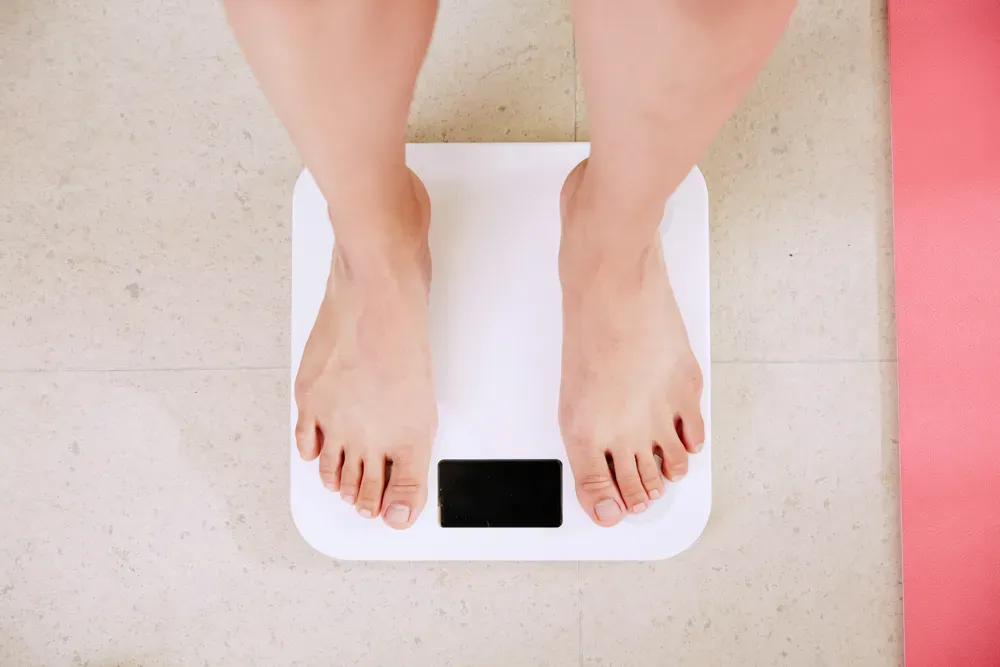
If you're working hard toward your health and fitness goals but the number on the scale isn't moving the way you expected, you may be tempted to assume you're doing something wrong. Before you slash your calories, add another cardio session or decide your plan "isn't working," take a step back.
The scale may be telling you a number, but it isn't telling you the whole story.
Your body weight is influenced by far more than body fat. Water, muscle, food volume, digestion, hormones, sodium, carbohydrates, stress, sleep and exercise can all influence what you see when you step on the scale.
And for women over 40, understanding this becomes especially important. Midlife brings changes that can make scale fluctuations feel even more confusing.
Here are three surprising reasons your scale may be lying to you.
1. A Great Workout Can Temporarily Increase Your Weight
One of the most frustrating experiences can be working out consistently, particularly with strength training, only to step on the scale and see the number go up. But here’s the thing: that increase doesn't automatically mean you've gained fat.
When you challenge your muscles, especially with resistance training, your body begins the process of repairing and adapting to that training. Temporary inflammation and changes in fluid balance can contribute to short-term increases in body weight. Your muscles also store glycogen, the body's stored form of carbohydrate. Glycogen is stored along with water, so changes in your training and carbohydrate intake can influence your scale weight. In other words, a heavier number after a workout doesn't necessarily mean your workout didn't work. Your body may actually be responding exactly as you want it to.
2. Hormones, Stress and Sleep Can Change the Number
We tend to think of weight gain as something that happens because we ate too much or didn't exercise enough. But there are other factors to consider.
Hormonal fluctuations, particularly during perimenopause and menopause, can affect fluid balance and digestion. Stress and inadequate sleep can also influence appetite, recovery and water retention.
Then there's sodium. Have a restaurant meal, eat more salty foods than usual or simply change your normal eating pattern, and you may temporarily retain more water.
The result? You can wake up several pounds heavier without having gained several pounds of body fat overnight.
That isn't a breakdown, it's biology.
This is one reason I encourage women to look at patterns over time rather than obsess over individual weigh-ins. One number is a snapshot. Your overall trend provides much more useful information.
3. The Scale Can't Tell You What You're Losing
This is perhaps the biggest problem with relying exclusively on the scale. The scale measures total body weight. It doesn't know whether that weight comes from fat, muscle, water, food or other tissues.
Imagine two women who both weigh 150 pounds. One could have significantly more muscle and less body fat than the other. They could have completely different body compositions, fitness levels and health profiles despite having the exact same scale weight. This is why body composition matters.
For women over 40 who are strength training and prioritizing protein, maintaining or building muscle while losing body fat can be an important goal. Because muscle takes up less space than the same weight of fat, your body can become leaner and your clothes can fit differently even if the scale isn't changing dramatically.
You might notice that your waist measurement is decreasing.
Your jeans fit better.
You're lifting heavier weights.
You have more energy.
You're moving more easily.
Your workouts are getting stronger.
Those are all meaningful signs of progress.
So Should You Stop Weighing Yourself?
Not necessarily. The scale can be a useful tool when it's used appropriately. The problem isn't the scale itself - it's expecting it to tell you everything about your progress.
Instead of asking, "What do I weigh?" consider asking a bigger set of questions:
How do my clothes fit?
Am I getting stronger?
Are my measurements changing?
How is my energy?
Am I consistently following my nutrition and fitness habits?
How do I feel in my body?
Those answers can provide a much more complete picture.
If you do use the scale, try to look at patterns rather than individual numbers. A single weigh-in can be influenced by countless temporary factors. A trend over several weeks gives you much more useful information.
For women over 40, fitness doesn't have to revolve around chasing the smallest possible number on the scale. Your goals can be bigger than that. Maybe you want to build strength. Improve your body composition. Protect your bone health. Have more energy. Feel confident in your clothes. Keep up with your kids or grandkids. Travel without feeling limited by your fitness. Or simply feel stronger and more capable in your everyday life. Those outcomes can't be captured by one number on the scale.
So the next time the scale surprises you, don't immediately panic or abandon your plan. Take a breath. Look at the bigger picture. The scale is one piece of data, not the verdict on your progress or worth.
Your body is constantly changing and adapting. Your job isn't to chase every fluctuation. It's to create consistent habits, train strategically, fuel your body well and give the process enough time to work.
Progress should not always be measured in pounds. Look at strength, energy, confidence, consistency, and becoming the strongest version of yourself.
Need more support navigating the scale and your midlife body? Click here to book your free consult: