
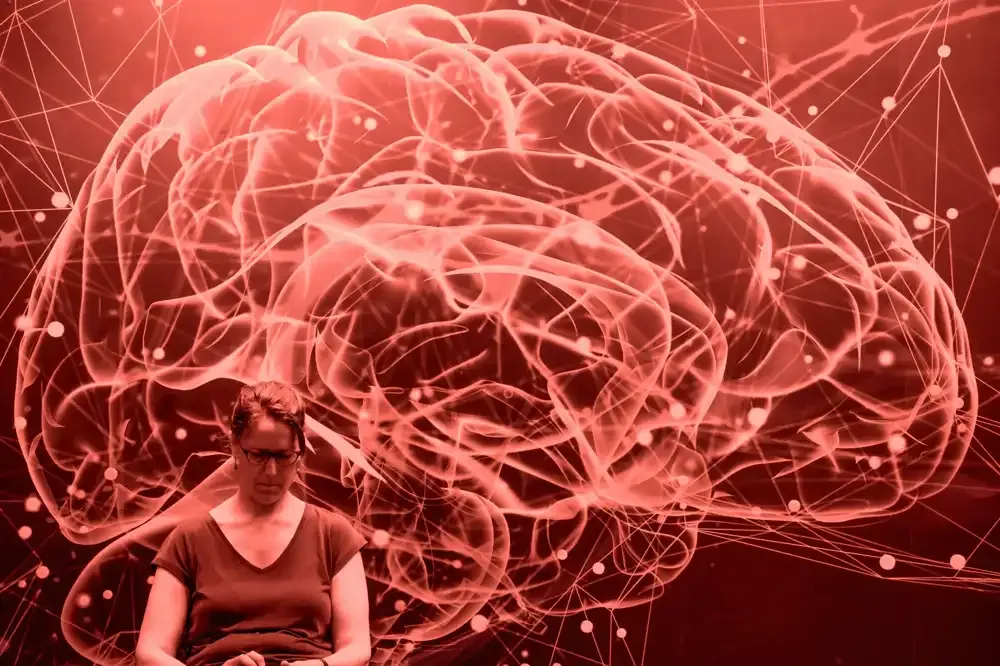
The Menopause Symptom You Might Be Blaming On Aging: Brain Fog
Have you ever walked into a room and completely forgotten why you’re there, lost your train of thought in the middle of a conversation, or struggled to find a word that you know you know?
If you’re a midlife woman experiencing these moments more frequently, you may have jokingly blamed it on getting older. But what if it isn’t simply aging?
Brain fog is one of the menopause symptoms that can easily be overlooked, dismissed, or attributed to general aging. And while occasional forgetfulness happens at every stage of life, the hormonal changes associated with perimenopause and menopause can contribute to noticeable changes in memory, concentration, mental clarity, and mood.
For busy midlife women, that can have a much bigger impact than simply forgetting where you left your phone.
🔥 Hot Flash #1: Your Brain Isn’t Getting Old. It’s Adapting.
Estrogen does much more than regulate reproductive health. It also interacts with systems involved in brain function, including memory, attention, mood, and cognition. As estrogen fluctuates and eventually declines during the menopause transition, some women notice that their brain simply doesn’t feel like it used to.
You may find yourself struggling to focus during a meeting, forgetting someone's name, rereading the same email three times, or losing your train of thought halfway through a sentence.
That doesn’t automatically mean something is wrong with your brain, and it certainly doesn’t mean you’re suddenly “too old.”
For many midlife women, these experiences are part of a larger physiological transition. Understanding that distinction matters because it changes the conversation from “What’s wrong with me?” to “What does my body need right now?”
That shift in perspective is incredibly empowering.
🔥 Hot Flash #2: Brain Fog Can Impact More Than Your Memory
Brain fog isn’t necessarily about memory alone. It can show up as difficulty concentrating, slower recall, mental fatigue, indecisiveness, or feeling like your thoughts are harder to organize.
And to be honest, midlife women already have plenty on their plates between managing a career, children, aging parents, relationships, household responsibilities, finances, and personal health, all in the name of trying to make progress toward personal and professional goals.
When your mental energy feels depleted, even simple tasks can require more effort.
This is where your daily habits can become powerful tools. Prioritizing quality sleep, eating nutrient-dense foods, staying hydrated, managing stress, incorporating regular movement, and engaging in resistance training can all support overall health during midlife.
The answer isn't to simply “try harder.” In fact, one of the most important principles in coaching is learning how to work with your current circumstances instead of constantly fighting against them.
Your strategy may need to change because your body has changed.
🔥 Hot Flash #3: Don’t Accept Feeling “Less Like You”
Perhaps the most frustrating part of brain fog isn't forgetting something. It's the feeling that you aren't quite yourself.
You may wonder why something that used to feel easy now feels exhausting. You may question your ability to stay focused at work or follow through on your goals. You may even start telling yourself that this is simply what getting older feels like.
It doesn't have to be.
That doesn't mean every memory lapse or concentration issue is caused by menopause. Persistent, severe, sudden, or concerning cognitive changes deserve a conversation with your healthcare professional because there can be many possible causes.
But recognizing the connection between menopause and brain health can help you stop automatically blaming yourself, or your age.
For midlife women, this is an important distinction. Menopause isn't the end of your ability to grow, change, perform, achieve, or pursue meaningful goals. It's a season that may require a different strategy.
That's where coaching can make a meaningful difference.
One of the biggest misconceptions about menopause is that you simply have to endure whatever symptoms come your way. Instead, think of menopause as an opportunity to become more intentional about how you take care of yourself.
Your goals may be different than they were 10, 20, or 30 years ago. Your schedule may be different. Your recovery needs may be different. Your nutrition and fitness strategy may need to evolve, too.
That's not failure. That's adaptation.
In coaching, we look at the whole picture, not just one symptom or one number on a scale. We look at your habits, routines, environment, priorities, obstacles, mindset, and goals, then create strategies that actually fit your life.
For midlife women, that might mean replacing an all-or-nothing workout mentality with consistent strength training. It might mean creating a better sleep routine instead of relying on another cup of coffee. It might mean eating enough protein and fiber throughout the day instead of constantly restricting calories. Or it might mean building systems that make healthy choices easier when life gets chaotic.
The objective isn't perfection. It's creating a sustainable approach that helps you feel strong, capable, energized, and confident.
Your body is changing, but that doesn't mean your potential is shrinking.
Stop Blaming Age. Start Looking for the Why.
If you've been experiencing brain fog, don't immediately assume it's because you're getting older.
Pay attention to when it happens. Look at your sleep, stress, nutrition, activity, recovery, medications, and overall lifestyle. Track patterns. Talk with your healthcare provider about persistent symptoms and explore what support may be appropriate for you.
Most importantly, don't use menopause as a reason to lower your expectations for yourself.
Use it as a reason to get smarter about your strategy.
Coaching can help you turn that awareness into action by connecting your current reality with the goals you still want to achieve.
You don't have to become a different person. You just need a strategy that supports the woman you're becoming.
Click here to book your free consult:
Schedule a Consultation with Debi | Hello Coaching